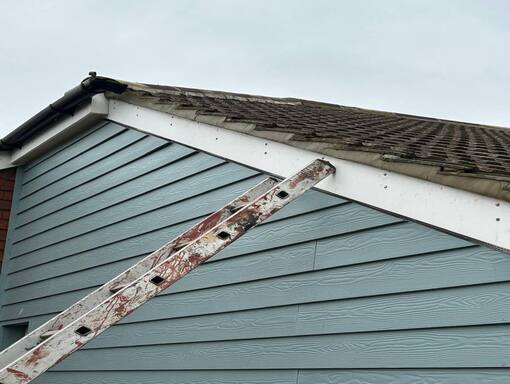
How to Decide Whether Repair or Replacement Is More Appropriate
Roof repairs can resolve many localised problems, including slipped tiles, damaged flashing and isolated leaks. However, there comes a point when repairing individual defects may no longer provide dependable protection. If deterioration affects several parts of the roof, replacement may need to be considered.
For property owners in Beetley, Norfolk, the decision should be based on a professional assessment of the complete roofing system. The age of the roof is relevant, but its condition, construction and repair history provide a much clearer indication of the work required.
When Is a Roof Repair Still Worthwhile?
A repair may remain appropriate when the damage is confined to a particular area and the surrounding roof is structurally sound. Examples include:
- A small number of slipped or broken tiles
- Localised damage following strong winds
- A limited defect in the lead flashing
- Minor deterioration around a roof penetration
- An isolated leak with a clearly identifiable source
- Damage affecting one section of a flat roof
- A small area of worn mortar
These problems can often be addressed without disturbing serviceable sections of the roof. The repair should correct the underlying cause rather than simply conceal the visible symptom.
Signs That Damage May Be Too Widespread for Local Repairs
Repeated defects across several parts of the roof can indicate that deterioration is no longer localised. Warning signs may include:
- Numerous cracked, loose or missing tiles
- Leaks appearing in different rooms
- Widespread deterioration of the roof covering
- Several weak points around valleys, ridges or junctions
- Large areas of damaged underlay
- Sagging or uneven sections
- Moisture affecting battens or roof timbers
- Repairs repeatedly failing or becoming necessary elsewhere
In these circumstances, further patching may leave other vulnerable sections untreated. A broader assessment can determine whether partial renewal or full replacement would provide a more reliable outcome.
Why Repeated Leaks Matter
A recurring leak does not always mean that the whole roof has failed. Water can travel beneath roofing materials, making its true entry point difficult to locate. An earlier repair may have addressed one defect while another remained undetected.
However, repeated water ingress can also indicate:
- Brittle or failing underlay
- Deterioration across several roof slopes
- Movement within the roof structure
- Multiple defects around adjoining components
- Poor drainage through valleys or outlets
- Widespread problems with fixings
The source and route of the water must be established before deciding whether another local repair is worthwhile.
The Condition Beneath the Roof Covering
Tiles, slates or membranes form the visible surface, but they are only part of the roofing system. The condition of the underlay, battens, decking and structural timbers can significantly affect the decision.
A roof may appear repairable from outside while concealed components have deteriorated following prolonged water ingress. Signs of hidden damage can include:
- Damp or stained timbers
- Soft or decaying battens
- Torn or brittle underlay
- Wet insulation
- Mould or persistent musty odours
- Daylight visible through the roof
- Distortion within the roof structure
If the supporting materials are extensively affected, repairing the external covering alone may not resolve the problem.
Does the Age of the Roof Determine the Answer?
An older roof does not automatically require replacement. Some ageing roofs remain serviceable because their materials and supporting structure are still in good condition. Equally, a newer roof can develop serious problems if installation, drainage or ventilation is inadequate.
Age should be considered alongside:
- The type and condition of the roof covering
- The quality of previous work
- The number of repairs already completed
- The condition of hidden components
- The performance of valleys, flashing and drainage
- The extent of current damage
This evidence-based approach avoids replacing a repairable roof while recognising when continuing repairs may be unsuitable.
When Previous Repairs Become an Important Clue
A history of frequent repairs can reveal that the roof is reaching a point where isolated work is no longer addressing its overall condition.
The roof may need reassessing when:
- The same area has been repaired several times
- New leaks appear soon after earlier work
- Different sections fail in quick succession
- Repairs involve increasingly large areas
- Surrounding materials are too fragile to support further work
- Patch repairs now cover a substantial part of the roof
A good assessment should examine how previous repairs interact with the original roof and whether the remaining materials can still perform effectively.
Could Partial Replacement Be Suitable?
The choice is not always between one small repair and complete roof replacement. Partial replacement may be appropriate when one roof slope or clearly defined section has deteriorated more severely than the rest.
This may be considered when:
- Damage is concentrated on one elevation
- An extension or adjoining section has a separate roof covering
- One flat roof area has failed while others remain sound
- The affected section can be renewed without compromising adjoining materials
Careful detailing at the junction between old and new sections is essential. Partial replacement should only be recommended when the retained areas have sufficient serviceable life remaining.
What a Professional Roof Assessment Should Examine
A reliable recommendation requires more than a quick look at the visible defect. A professional inspection may consider:
- Tiles, slates or roof membranes
- Ridges, hips, valleys and verges
- Lead flashing and roof junctions
- Chimney details and roof penetrations
- Underlay, battens and accessible timbers
- Flat roof decking and drainage
- Previous repair areas
- Internal signs of water ingress
Viewing these components together helps establish whether the damage is localised, connected or widespread.
Avoiding Unnecessary Work
Replacement should not be recommended simply because a roof has developed a leak. If the defect is isolated and the wider roof remains sound, an effective repair may be entirely suitable.
Equally, continuing to repair a roof with widespread deterioration can result in recurring disruption without restoring dependable performance. The correct decision is the one supported by the roof’s actual condition.
Conclusion
A roof may be too damaged for further repairs when deterioration is widespread, leaks keep returning, supporting materials are affected or defects are developing across several areas. Localised problems, however, can often still be repaired when the surrounding roof remains secure and serviceable.
If you are unsure whether your roof needs another repair or more extensive work, Beetley Roofing Services can carry out a careful assessment and recommend an appropriate course of action. This provides the clarity needed to address the roof’s condition without undertaking unnecessary work.
Call us on: 01603 249 398
Click here to find out more about Beetley Roofing Services
Click here to complete our contact form and see how we can help with your roofing needs.