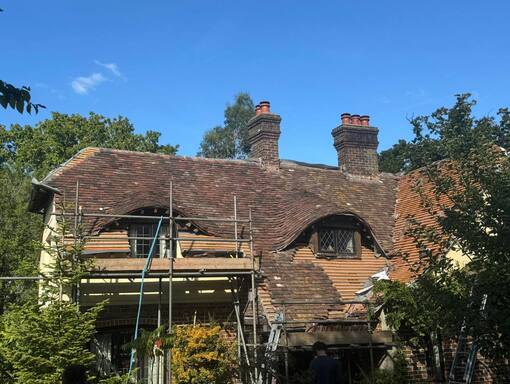
An older roof does not automatically need replacing simply because it has required repairs in the past. Roofs are exposed to changing weather conditions throughout their working life, and occasional issues such as slipped tiles, damaged flashing or isolated leaks can develop without indicating that the entire roofing system has reached the end of its useful life.
For homeowners in Beetley, Norfolk, the more important question is whether previous repairs have successfully resolved isolated problems or whether defects are becoming increasingly widespread and frequent. At Beetley Roofing Services, we assess the overall condition of a roof before recommending whether further repairs remain appropriate or whether more extensive work should be considered.
Previous Roof Repairs Are Not Necessarily a Bad Sign
Most roofs will require some attention during their lifetime.
A repair carried out several years ago that has remained secure and watertight may simply demonstrate that a localised defect was identified and corrected successfully.
Examples of isolated repairs can include:
- Replacing damaged or slipped tiles
- Repairing flashing
- Addressing a specific leak
- Renewing a deteriorated section of roofing
- Correcting problems around roof junctions
- Repairing localised storm-related damage
The existence of previous repair work therefore tells only part of the story. Its location, extent and subsequent performance are much more informative.
Look at the Roof as a Complete System
A roof consists of considerably more than its visible tiles or slates.
Its performance depends on several components working together, including the roof covering, battens, underlay, flashing, valleys, ridges, verges and other junction details.
An older roof may still have many serviceable components even if one particular area has previously needed attention.
This is why the overall condition should be assessed rather than assuming that age or repair history alone determines whether the roof should be retained.
How Often Are Repairs Becoming Necessary?
The frequency of roofing problems is an important consideration.
There is a significant difference between an older roof that required one isolated repair several years ago and one that develops new problems regularly.
If defects are appearing increasingly often, this can indicate that roofing materials are deteriorating more generally.
Warning signs can include:
- Repeated leaks
- Tiles regularly slipping or breaking
- Several areas requiring attention
- Recurring flashing problems
- Increasing deterioration across the roof covering
- Previous repairs failing repeatedly
A pattern of frequent problems deserves a broader assessment.
Are Problems Confined to One Area?
The distribution of defects can provide useful information about the roof’s overall condition.
If previous repairs have all involved one particular junction or small section, the remainder of the roof may still be performing effectively.
Where repairs are scattered across several roof slopes or different components are beginning to fail, wider deterioration may be taking place.
Understanding this distinction can help avoid replacing sound roofing unnecessarily while also preventing excessive reliance on repeated patch repairs where the roof is declining more generally.
The Condition of the Roof Covering Matters
Tiles and slates naturally experience weather exposure over many years.
An inspection should consider whether the majority of the covering remains secure and serviceable or whether widespread deterioration is becoming evident.
A small number of damaged tiles can often be replaced individually. However, if large numbers are deteriorating, cracking or becoming insecure, continually replacing them one by one may no longer address the wider condition.
The same principle applies to many other roofing components.
What Is Happening Beneath the Tiles?
The visible roof covering is only the outer layer of the system.
Older roofs may have underlay and battens that have also experienced many years of service. Where these components remain in suitable condition, localised repairs to the external covering may be entirely reasonable.
If deterioration beneath the tiles has become extensive, however, replacing individual surface components may provide only limited benefit.
A professional assessment can help establish whether problems are confined to accessible external details or indicate deeper deterioration.
Previous Leak Repairs Can Be Particularly Informative
A roof that leaked once because of an identifiable local defect may remain perfectly serviceable after the problem has been corrected.
Recurring leaks are different.
If water continues entering the same area despite previous repairs, the original source may not have been fully identified. Alternatively, deterioration may extend beyond the section previously treated.
Water can travel beneath roofing materials before becoming visible internally, which means the location of a ceiling stain does not necessarily correspond directly with the external defect.
Repeated leaks therefore warrant careful investigation rather than automatically repeating the same repair.
Flashing Can Often Be Repaired Independently
Flashing protects vulnerable roof junctions and can sometimes deteriorate while the main roof covering remains in good condition.
Problems affecting flashing do not automatically mean that the complete roof needs replacing.
Where the surrounding roofing remains serviceable, professional flashing repairs may restore the affected junction without disturbing sound areas unnecessarily.
However, repeated deterioration across several junctions should be considered alongside the age and overall condition of the roof.
Valleys and Junctions Deserve Close Attention
Certain areas of a roof deal with particularly demanding conditions.
Valleys carry concentrated rainwater, while junctions between different roof sections depend on careful detailing to remain weather-resistant.
An older roof may develop problems in these areas before deterioration becomes widespread elsewhere.
Where defects remain localised, repairing or renewing the affected detail can potentially extend the useful life of the wider roof.
Does an Old Roof Need to Look Perfect?
Ageing roofing materials will naturally develop a more weathered appearance.
Visual ageing does not necessarily mean structural or functional failure.
The important questions are whether the roof remains secure, manages rainfall correctly and continues protecting the property.
Replacing a roof purely because it looks older may be unnecessary if its main components remain serviceable. Conversely, a roof that appears reasonable from ground level can still contain defects requiring professional attention.
Condition matters more than appearance alone.
When Does Continuing to Repair Make Sense?
Maintaining an older roof can remain a sensible approach when:
- Defects are genuinely localised
- Previous repairs have remained successful
- The majority of roofing materials remain serviceable
- Leaks are not repeatedly developing
- Supporting components remain in suitable condition
- Problems can be addressed without repeatedly disturbing large sections
In these circumstances, timely repairs can help preserve an otherwise functional roof.
When Might a Different Approach Be Needed?
There comes a point where repeated repairs can indicate that the roofing system is deteriorating more generally.
More extensive work may deserve consideration where there is:
- Widespread tile or slate deterioration
- Repeated water ingress
- Numerous repair patches across the roof
- Significant underlay deterioration
- Recurring movement of roofing materials
- Multiple areas failing within a relatively short period
- Problems affecting several components simultaneously
No single defect determines whether replacement is necessary. The overall pattern and condition of the roof provide the clearest indication.
Partial Renewal May Sometimes Be Appropriate
Roofing decisions are not always limited to either repairing one tile or replacing the complete roof.
Where one roof section has deteriorated significantly while another remains serviceable, more extensive work may sometimes be concentrated on the affected area.
This is why professional assessment is important. The recommended solution should reflect the actual condition of the individual roof rather than applying the same approach to every older property.
Why Regular Assessment Becomes More Valuable as a Roof Ages
Older roofs can continue performing effectively, but emerging defects are worth identifying before they become more extensive.
Checking the condition of tiles, flashing, valleys and other vulnerable areas can help identify localised problems while repairs remain practical.
It can also provide a clearer understanding of how the roof is ageing.
Rather than waiting for repeated leaks to determine that something is wrong, periodic professional attention can help homeowners make more informed decisions about future maintenance.
Professional Assessment Helps Avoid Unnecessary Replacement
Determining whether an older roof is worth retaining requires experience.
At Beetley Roofing Services, we assess roofing problems throughout Beetley, Norfolk, with attention to both the immediate defect and the wider condition of the roof.
Where sound roofing can reasonably be retained, appropriate repairs may help extend its serviceable life. Where deterioration has become widespread, identifying that broader pattern allows a more suitable long-term solution to be considered.
The objective is not to replace a roof simply because it is old, but to recommend work based on how it is actually performing.
Conclusion
Yes, an old roof can still be worth keeping even if it has needed previous repairs. Occasional repairs are a normal part of maintaining many roofing systems and do not necessarily indicate that complete replacement is required.
What matters is the pattern of deterioration. A roof with a few successfully repaired localised defects may continue performing effectively for years, while increasingly frequent leaks, widespread material deterioration and repeated failures can indicate that a more comprehensive solution should be considered.
If you have an older roof in Beetley, Norfolk, and are unsure whether further repairs remain worthwhile, Beetley Roofing Services can assess its current condition and identify the most appropriate way forward. Contact our team to arrange a professional roof assessment and determine whether targeted repairs can continue protecting your property effectively.
Call us on: 01603 249 398
Click here to find out more about Beetley Roofing Services
Click here to complete our contact form and see how we can help with your roofing needs.